
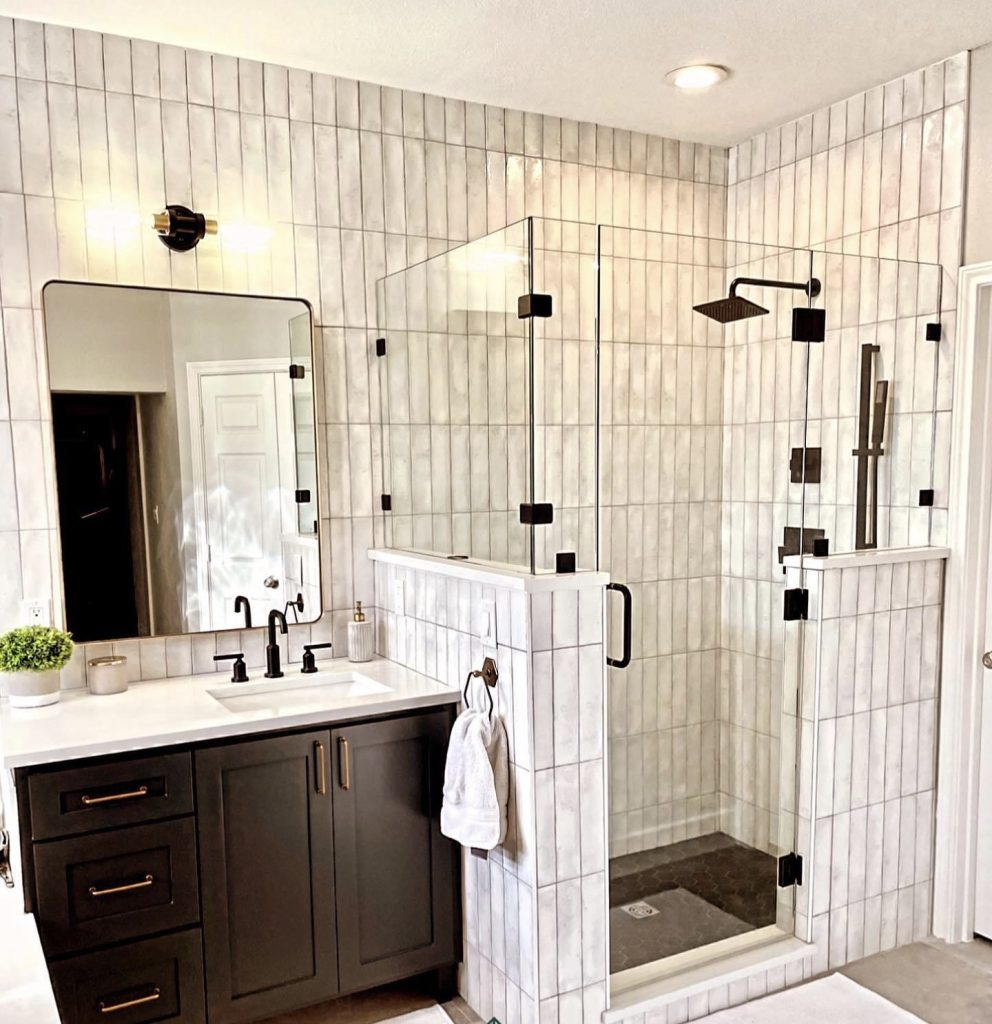
New Orleans runs warm and wet all year, with more than 60 inches of rain and a mean temperature above 70 degrees, so a bathroom here rarely dries out between showers. That matters for an enclosure because every seal, gasket and bead of silicone in it is fighting moisture from both sides.
The parts that give up first are the small ones nobody looks at. A shower door that leaks onto the floor is rarely a glass problem. It is a worn-out part problem, and the part can be found.
Your enclosure works quietly for years, then one morning there is a puddle at the hinge side or a damp strip along the curb that was not there last week.
At TurnKey Bathroom Renovations, we see the same handful of causes across the New Orleans metro and our service areas, and the order we check them in is the order this post follows.
If you would rather have us find it, contact us and we will look at the enclosure before anything gets replaced.
How Long Does a Shower Enclosure Stay Watertight in a New Orleans Home?
An enclosure is three systems stacked on top of each other, and each one has its own clock. The glass and frame last decades. The soft parts that seal them do not. The waterproofing under the tile is supposed to outlast everything, but only if it was built and tested correctly in the first place.
Sweeps and Seals: Three to Five Years
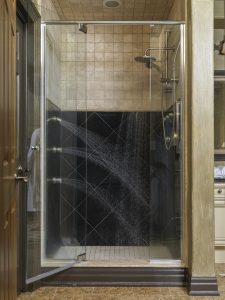 The bottom sweep and the vertical seals along the door edges are the wear parts of the whole assembly. Glass installers put their working life at three to five years depending on water hardness, cleaning products and how often the shower runs.
In a house where the shower runs twice a day and the bathroom never fully dries, the short end of that range is the honest expectation. When they harden, shrink or lose their grip on the glass, the enclosure starts leaking even though nothing looks broken.
Silicone Joints: Until Something Moves
 The silicone at the corners, along the wall channels and where the fixed panel meets the curb is a movement joint, not decoration. Tile industry guidance calls for a flexible sealant at every change of plane, meaning wherever one surface meets another at an angle, because the two surfaces expand, contract and settle in different directions. Good silicone tolerates that. It fails when it was the wrong product, when it was applied over a damp or dirty surface, or when the house has moved more than the bead can stretch.
The Pan and Membrane: The Life of the Shower, If It Passed Its Test
Under the tile sits a waterproof pan or membrane that carries any water reaching it back to the drain. Done right, it is the one part of the shower that should never leak. The industry check is a flood test after the waterproofing goes in and before tile is set: the pan is filled to just under the curb and held for at least 24 hours, and if the level drops, the drain connection, the seams or the corners have a problem. A pan that never had that test is the one leak source that cannot be fixed from above.
Warning Signs at the Door and Glass
Many enclosure leaks start here, and these are the inexpensive ones to correct once the failed part is named. The fastest diagnostic is the one the glass trade uses: run the shower for a few minutes and watch where the water actually comes out.
Water on the Floor After Every Shower: A Worn Sweep or Seal
A thin line of water under the door, or a puddle that forms in the same spot every time, points to the bottom sweep. Soap film, mineral deposits and mildew build up on the sweep until it no longer sits tight against the threshold, and the sweep itself hardens with age. The same applies to the vertical seals: when water appears along the closing edge of the door rather than under it, the side seal has shrunk or split. Both are replaceable parts, and replacing them is usually the whole repair.
A Wet Strip Along the Hinge Side: Drifted Alignment or a Failed Hinge Gasket
Water that escapes at the hinges tells a different story. Frameless doors hang on precision hinges that can loosen slightly over years of use, and once the door drops even a little, its bottom edge stops running parallel to the curb and the gaps the seals were designed for open up. Many hinges also carry small rubber or silicone gaskets that perish over time. A hinge-side leak is fixed by adjusting the door back to level, and if the gasket is gone, by replacing the hinge assembly, since the gaskets rarely come as separate parts.
Drips at the Bottom Corners: Cracked or Missing Silicone
When the leak shows up at the outside corners of the enclosure, or where the fixed panel meets the curb, the silicone bead has cracked, peeled or grown mold underneath. Water runs down the inside of the glass, finds the gap, and comes out on the floor a few inches from where it entered. The fix is to strip the old bead completely, let the joint dry, and re-seal with a 100 percent silicone product rather than a latex or siliconized caulk, which industry guidance rates as low-performance in wet joints.
One more door-side cause is design rather than wear. A door that is too short for the head height, or a fixed panel too narrow to catch the spray from a rain head, will always throw some water out. Glass installers are clear that frameless enclosures are water-resistant, not waterproof: a little moisture at the gaps during direct spray is normal, while a steady stream pooling on the floor is not.
Warning Signs That Point Below the Tile
When the door checks out and the floor is still wet, or when the damage shows up somewhere other than the bathroom floor, the problem has moved past the glass. These are the signs that the tile assembly or the pan underneath is letting water through.
Grout Cracking at the Corners: Grout Where a Movement Joint Belongs
A hairline crack running up the inside corner of a tiled shower, or along the line where the wall meets the curb, is a familiar finding in an older enclosure. Those corners are changes of plane, and the tile standards call for a flexible sealant there, not grout. Grout is rigid, so when the walls and floor move against each other it cracks, and the crack becomes a path for water to reach whatever is behind it. Raking the grout out of the corner and replacing it with silicone closes the path.
Loose Tile or a Soft Curb: Water Behind the Assembly
Tiles that sound hollow when tapped, a curb that gives slightly underfoot, or a spot where the tile has lifted at the edge mean water has been getting behind the surface for a while. The bond between tile and substrate has let go, and the waterproofing behind it is the first suspect, either compromised or never continuous. This is no longer a sealant repair. The affected section has to be opened, the membrane inspected, and the assembly rebuilt from the waterproofing outward.
Stains or Smell in the Room Below or Next Door: A Pan Problem
A ceiling stain under an upstairs bathroom, a musty smell in the adjoining closet, or discolored baseboard on the other side of the shower wall point to the pan. Water reaching the pan is supposed to drain away. When it shows up outside the shower footprint instead, the pan liner has a failed seam, a bad drain connection, or it was never flood tested. The diagnostic is the same test the shower should have passed when it was built: plug the drain, fill to just under the curb, and see whether the level holds for 24 hours.
Why New Orleans Homes Are Especially Hard on Shower Enclosures
The same failures happen everywhere, but local conditions push them to happen sooner. The table below is what we most often find behind an enclosure leak in the metro, and what actually prevents it.
| Factor | Effect on the Enclosure | What Helps |
|---|---|---|
| A bathroom that never fully dries | Sweeps, seals and silicone stay wet on both sides, so mildew and hardening set in early | Run the exhaust fan through and after every shower, squeegee the glass, replace sweeps on the short end of their three to five year life |
| Older houses that shift and settle | Corners and curb joints move more than rigid grout can take, and doors drift off level | Silicone at every change of plane, hinge adjustment as part of routine maintenance |
| Enclosures added to bathrooms that were built for a tub | Pans and curbs retrofitted into an old footprint are the ones most often installed without a flood test | Insist on a 24-hour flood test before tile on any new or rebuilt pan |
| Heavy daily use in single-bathroom homes | Wear parts reach the end of their life faster and small drips get ignored | Treat any puddle that repeats in the same place as a part to replace, not a habit to mop |
The pattern in the table is the pattern in the repairs. Leaks that live at the door are cheap and fast to fix when they are caught early. Leaks that live under the tile get more expensive the longer they are mopped up instead of traced.
Find the Leak Before It Reaches the Subfloor
A repeating puddle is information. It tells you which part failed, and every week it is ignored is a week that water spends working into the curb, the wall cavity, or the floor framing under the shower.
The door-side causes in this post are parts and adjustments. The tile-side causes are rebuilds. The difference between the two is usually time.
At TurnKey Bathroom Renovations, our shower enclosure work across the New Orleans metro covers both ends of that range, from re-sealing and re-hanging a door that has drifted to opening a failed pan and rebuilding the shower from the waterproofing out, with the flood test done before a single tile goes back on.
If your enclosure is leaving water on the floor, call us today at (504) 603-0735 and we will find the part that failed.
Frequently Asked Questions
Why does my shower door leak at the bottom?
The bottom sweep is the usual cause. It hardens, shrinks or collects mineral and soap buildup until it no longer seals against the threshold, and it is a replaceable part with a working life of roughly three to five years.
Why is water coming out on the hinge side of the door?
The door has usually dropped slightly out of level, opening a gap the seals cannot cover, or the small gasket inside the hinge has perished. Re-leveling the door fixes the first; replacing the hinge assembly fixes the second.
Is a small amount of water outside a frameless shower normal?
Yes. Frameless enclosures are designed to be water-resistant rather than waterproof, so minor moisture at the gaps during a direct spray is expected. A steady stream or a puddle that forms every time is not.
Should the corners of a tiled shower be grouted or caulked?
Caulked. Tile industry standards call for a flexible sealant, ideally 100 percent silicone, at every change of plane because the surfaces move in different directions and grout cracks there.
What kind of caulk should be used on a shower enclosure?
A sealant that meets ASTM C920, the elastomeric joint sealant standard, which in practice means 100 percent silicone, urethane or polysulfide. Acrylic, latex and siliconized latex caulks dry hard and are rated low-performance in wet joints.
How do I know if the shower pan is leaking?
Water showing up outside the shower footprint, such as a ceiling stain below or a musty smell in the next room, points to the pan. The test is to plug the drain, fill the pan to just under the curb, and check whether the level holds for 24 hours.
Can a leaking shower pan be repaired without removing the tile?
Generally no. The pan or membrane sits under the tile, so a failed seam or drain connection is reached by opening the floor, rebuilding the waterproofing, flood testing it, and re-tiling.
How often should shower door sweeps and seals be replaced?
Every three to five years is the working range glass installers give, and in a humid, heavily used New Orleans bathroom the shorter end is realistic. Replace them at the first repeating puddle rather than on a calendar.