
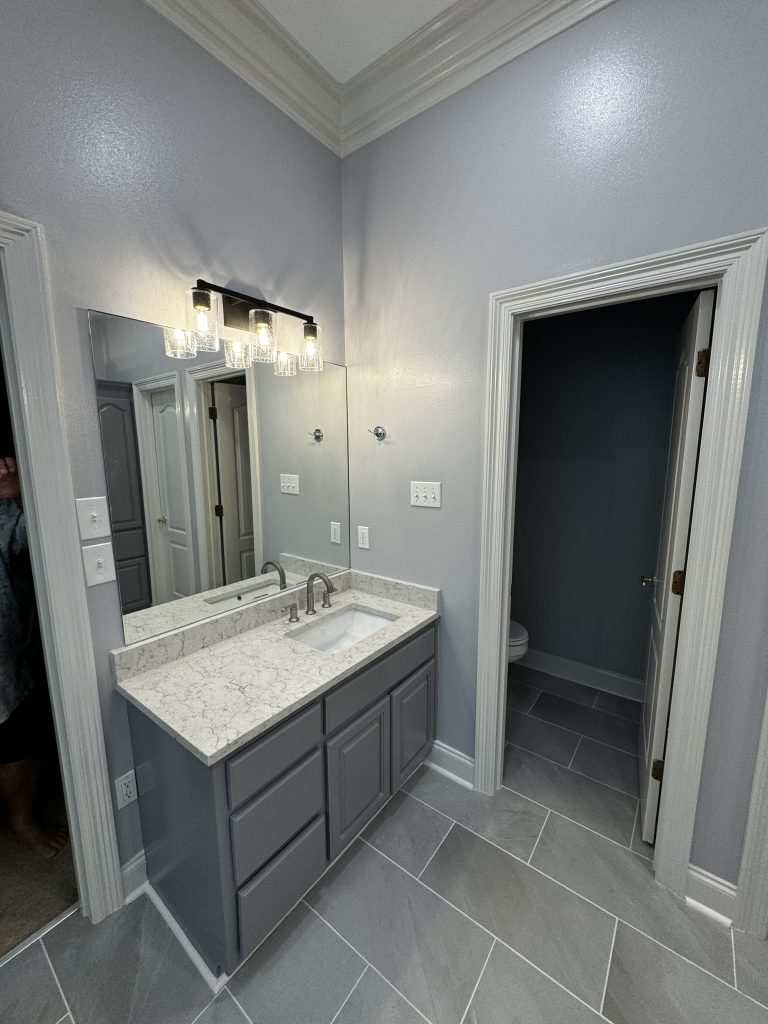
Most bathroom remodels go wrong in the planning rather than the building. Decisions get made in the wrong order, the scope grows once walls are open, and a project that was quoted as three weeks becomes six. Knowing the sequence in advance is what keeps a Baton Rouge remodel predictable.
A bathroom is the most concentrated room in a house. Plumbing, drainage, ventilation, electrical, waterproofing, and finishes all meet in a small footprint, and every one of them has to be right before the next goes in. At TurnKey Bathroom Renovations, we work across Baton Rouge and the surrounding parishes, and the projects that run smoothly are almost always the ones where the homeowner understood the order of operations before the first tile came off.
What a Bathroom Remodel Actually Involves in Baton Rouge
The word remodel covers a very wide range, and the first useful thing to establish is which kind of project you are actually planning.
Replacement, refit, and full renovation are three different jobs
A replacement swaps one fixture for another in the same location, such as a new tub where the old tub was. It is the shortest and least disruptive option, and it does not move any plumbing.
A refit keeps the room layout but replaces most of what is in it: fixtures, tiling, vanity, lighting. Plumbing stays broadly where it is, which keeps the cost and the timeline contained.
A full renovation moves things. Relocating a shower, converting a tub to a walk-in shower, or changing where the toilet sits means altering drainage and supply, and drainage is the part that constrains everything because it depends on falls and vents rather than on where you would like it.
Where the scope usually grows
Opening a wall in a bathroom reveals what has been happening behind it, and in an older property that is frequently more than expected. Long-term leaks around a shower base, deteriorated substrate behind tile, and previous work done to a lower standard are the three most common discoveries.
A well-run project expects this and prices a contingency rather than pretending the walls will be perfect. A quote with no allowance for what is behind the tile is a quote that will change.
The other direction scope grows is the room next door. Once a bathroom floor is open, an adjoining hallway or closet sometimes turns out to share the problem, and a leak that tracked along a joist may have travelled further than the tile suggested. It is worth knowing before you start whether you want that investigated or contained.
What decides the timeline
The critical path runs through the trades that have to happen in order: demolition, rough plumbing and electrical, inspection where required, substrate and waterproofing, tiling, then fixtures and finishes. Waterproofing and tiling both have curing times that cannot be compressed.
Fixture lead times matter as much as labor. A single back-ordered item chosen late can hold up a room that is otherwise ready, which is why selections should be locked before demolition rather than during it.
The Choices That Shape the Project
A handful of decisions determine most of the cost, the disruption, and the final result. Making them early is worth more than making them perfectly.
Keeping the layout or moving it
This is the single largest fork in the road. Keeping fixtures where they are avoids drainage work entirely and can cut both the timeline and the budget substantially.
Moving them buys a better room, and sometimes it is the only way to make a cramped bathroom usable. It is a legitimate choice, but it should be made deliberately and priced honestly rather than arrived at halfway through.
Tub, shower, or both
Whether to keep a bathtub is partly practical and partly about the house rather than the household. In a home with only one bathroom, removing the only tub can affect resale, so it is worth thinking past your own preference.
Tub-to-shower conversion is one of the most requested changes we handle, and our shower services cover replacement, barrier-free, and walk-in configurations. Where a tub is staying or being upgraded, our bathtub options include replacement, liners, and walk-in models.
Accessibility, decided now rather than later
Whether anyone in the household has mobility needs now or is likely to within the life of the bathroom is a question worth asking at the planning stage. Blocking for grab bars, a level threshold, a wider door, and a seat are all far cheaper to build in than to retrofit.
Even where nothing is needed yet, having the wall blocking in place costs very little during construction and makes a future change straightforward.
What Makes a Louisiana Bathroom Different
Regional conditions change what a bathroom has to withstand, and Baton Rouge sits squarely in them.
Humidity is a constant load, not a seasonal one
A bathroom in this climate is dealing with humid ambient air before anyone runs a shower. That raises the importance of ventilation and of a waterproofing system that is genuinely continuous rather than a membrane with gaps at the awkward junctions.
Extraction that actually vents outside, rather than into a ceiling void, is one of the cheapest and most frequently botched elements of a bathroom.
Fan capacity and run time matter as much as the ducting. A unit that is undersized for the room, or wired so it stops the moment the light goes off, never clears the moisture a shower puts into the air. Running it on a timer past the end of the shower does more for a bathroom in this climate than most of the choices people spend longer deliberating.
Materials deserve the same thought. Surfaces and hardware that hold up in a dry climate can struggle where the air stays damp for months, so finishes, fixings, and any cabinetry going into the room are worth choosing with that in mind rather than on appearance alone.
Older housing stock carries older plumbing
Baton Rouge, the state capital and the seat of East Baton Rouge Parish, has housing spanning many decades, and a remodel in an older property often meets supply and waste pipework that was appropriate when installed and is not now.
Discovering that during demolition is normal. Deciding in advance how far you are willing to go if it appears is what keeps the project calm.
The judgment call is usually about how much to renew while the wall is open. Replacing a short run of accessible pipework during a remodel costs a fraction of what the same work costs once it is behind new tile, so the economics favor doing it now even when the existing pipe has life left in it. That is a decision worth making on cost over the life of the bathroom rather than on the quote in front of you.
Ground movement and settlement
Louisiana soils move, and houses move with them. Cracked tile, doors that no longer close, and floors that are out of level are the visible signs, and they matter in a bathroom because tile and waterproofing are unforgiving of movement.
A floor that is significantly out of level needs correcting before tiling rather than being tiled over, and that is a scope item worth surfacing at the quote stage.
How a Baton Rouge Bathroom Remodel Runs, Stage by Stage
The sequence below is not a preference. It is dictated by what has to be finished before the next trade can start, and understanding that is what lets you read a schedule and know which delays matter.
The stages that cannot be reordered
Rough plumbing and electrical have to be complete before walls close, and walls have to close before waterproofing, and waterproofing has to be sound before tile. Nothing in that chain can be swapped, so a hold-up in an early stage moves everything behind it by the same amount.
This is also why adding scope mid-project is expensive out of proportion to the work itself. Deciding to move a shower after the walls are closed does not just add the plumbing, it reopens a stage that was finished and restarts everything downstream of it.
Where curing time sets the floor on the schedule
Waterproofing membranes and tile adhesives both need time to cure, and that time is a material property rather than a matter of effort. No additional labor shortens it, and a project pushed to tile over an uncured membrane or grout over uncured adhesive is buying a failure later.
When a quoted timeline looks noticeably shorter than others for the same scope, this is a fair thing to ask about. The answer tells you whether the schedule respects the materials.
What a realistic contingency covers
A contingency is not padding, it is an agreed answer to a predictable question. In a bathroom the question is what condition the substrate and the pipework are in behind finishes that have been in place for years.
Agreeing in advance how discoveries will be priced and approved keeps that moment procedural instead of contentious. Projects without that agreement are where the difficult conversations happen.
| Stage | What Happens | What It Depends On |
|---|---|---|
| Design and selections | Layout confirmed, fixtures and finishes chosen, scope and contingency agreed | Decisions being locked before work starts, and lead times on anything ordered |
| Demolition | Fixtures, tile, and substrate removed, and the condition behind them assessed | What is found in the walls and floor, which is where most scope changes originate |
| Rough-in | Plumbing and electrical moved or renewed, blocking added for grab bars and fixtures | Whether the layout is changing, and any inspection required before closing walls |
| Waterproofing and tile | Substrate, membrane, then tiling and grouting | Curing times that cannot be rushed, and a floor flat enough to tile |
| Fixtures and finishing | Fixtures set, vanity and glass installed, sealing, final adjustments | Everything ordered having arrived, and the tiling being fully cured |
Each stage hands off to the next, so a delay early moves everything after it. That is why the planning stage carries more weight than its share of the calendar suggests.
What This Means for Your Baton Rouge Bathroom
A bathroom remodel is predictable when the decisions are made in the right order and unpredictable when they are not. The homeowners who have the smoothest projects are the ones who settled the layout question early, chose their fixtures before demolition, and agreed in advance what would happen if something unwelcome appeared behind the tile.
Before you take quotes, decide whether you are keeping the layout, whether the tub is staying, and whether accessibility should be built in now. Those three answers shape the scope more than any other choices you will make.
We serve homeowners across the area, and you can see the detail on our Baton Rouge service page. To talk through a project and get it scoped properly, TurnKey Bathroom Renovations offers a free consultation. Call us today at (504) 603-0735.
Frequently Asked Questions
How long does a bathroom remodel take?
It depends on whether the layout is changing and what is found during demolition. A straightforward refit that keeps the plumbing where it is runs considerably shorter than a renovation that relocates drainage. Curing times for waterproofing and tile set a floor on the schedule that no amount of extra labor can compress.
Can I keep using the bathroom during the work?
Not the one being remodeled. If it is the only bathroom in the house, that needs planning for before the project starts rather than being discovered on day one. Households with a second bathroom generally find the disruption manageable.
Is it cheaper to keep the same layout?
Usually, and often by a meaningful margin. Keeping fixtures in place avoids moving drainage, which is the most constrained and labor-intensive part of the work. If the existing layout functions, that money is often better spent on the finishes you will see every day.
What usually causes a bathroom project to run over?
Two things: decisions made late, and conditions found behind the walls. Selections locked before demolition remove the first entirely. The second is managed by expecting it and agreeing a contingency rather than hoping the walls are sound.
Do I need a permit for a bathroom remodel?
Requirements depend on the scope and the jurisdiction, and moving plumbing or altering electrical is more likely to trigger them than a like-for-like replacement. This is worth confirming for your specific property and scope before work begins rather than assuming either way.
Should I convert my tub to a walk-in shower?
It depends on how the household uses the room and how many bathrooms the house has. A walk-in shower is easier to enter and easier to clean, but removing the only tub in a home can matter at resale. Where a tub is wanted and access is the concern, a walk-in tub keeps both.
What is the most common thing found behind bathroom walls?
Moisture damage around the shower or tub, usually from a failed seal or an inadequate waterproofing detail rather than a burst pipe. It is often long-standing and invisible until demolition. Finding it is a good outcome, because the alternative is tiling over it.
Should accessibility features be added even if nobody needs them yet?
The blocking behind the wall is worth adding regardless, because it costs very little during construction and makes any future grab bar or seat a simple job. Whether to fit the hardware now is a separate and much easier decision to reverse.